

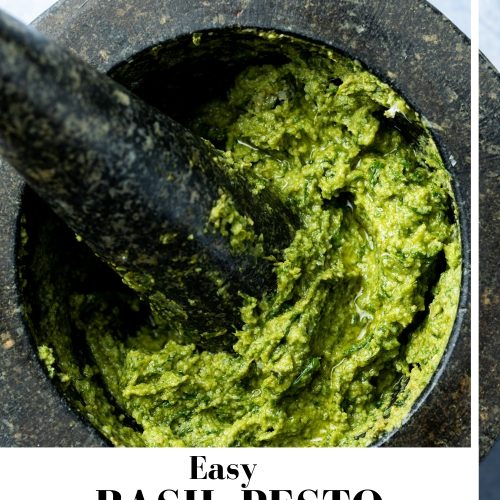
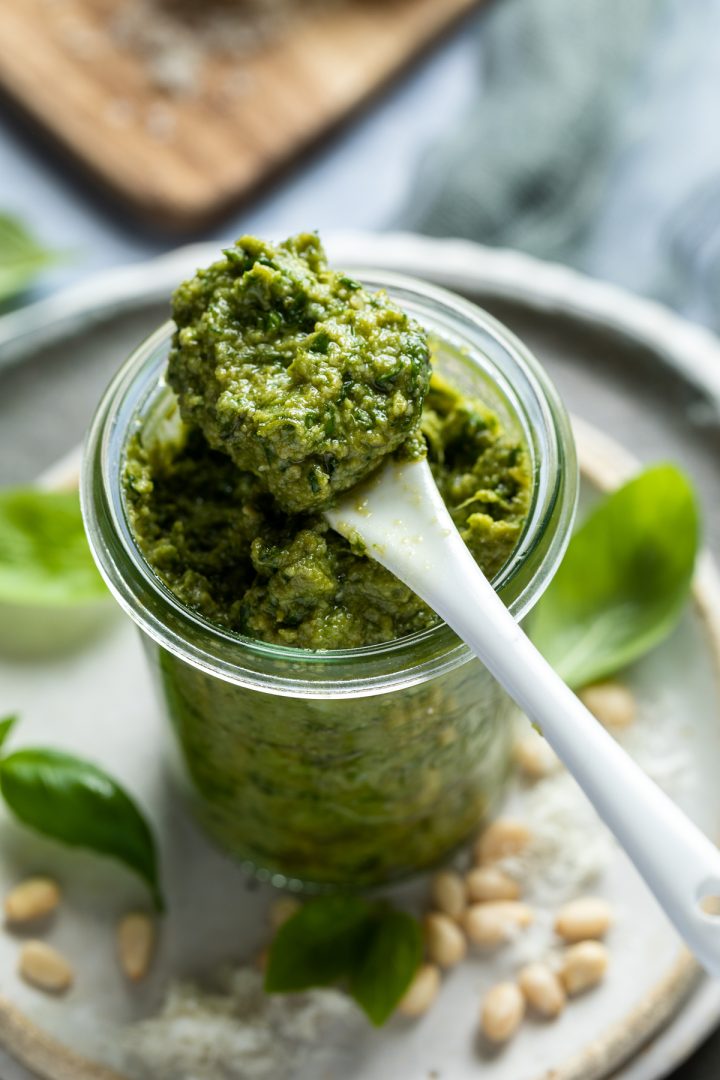
Pesto alla Genovese is a traditional Italian basil pesto based on basil, pine nuts, parmesan, pecorino, garlic and olive oil. It can be used in a number of dishes and takes minutes to prepare.
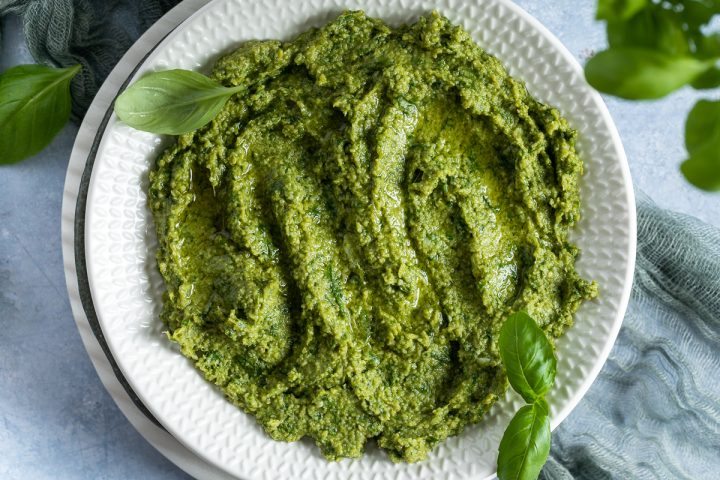
This classic basil pesto recipe takes minutes to make and can be used in so many dishes, from pasta to soups. Making your own pesto tastes so different to shop bought, and is also perfect for using up a glut of basil from the garden – you can freeze leftover pesto too!
Jump to:
Pesto alla Genovese
Originating in Genoa, a port city that is the capital of the Northern Italian region of Liguria, basil pesto is popular world wide. The word ‘pesto’ means ‘to pound’ referring to the traditional way it was made in a mortar and pestle, and can therefore be applied to many variations, however basil pesto (pesto al basilico) is the most well known.
I love making pesto. not only is it versatile and so delicious, but it saves many herbs from going to waste. If you are also a fan of different pesto recipes, then have a look at my dill walnut pesto, Thai basil pesto (which is vegan) and even avocado spinach pesto which I used a lot when baby led weaning!
Pesto ingredient notes and substitutions
Please scroll down to the recipe card at the end of the post for ingredient quantities.
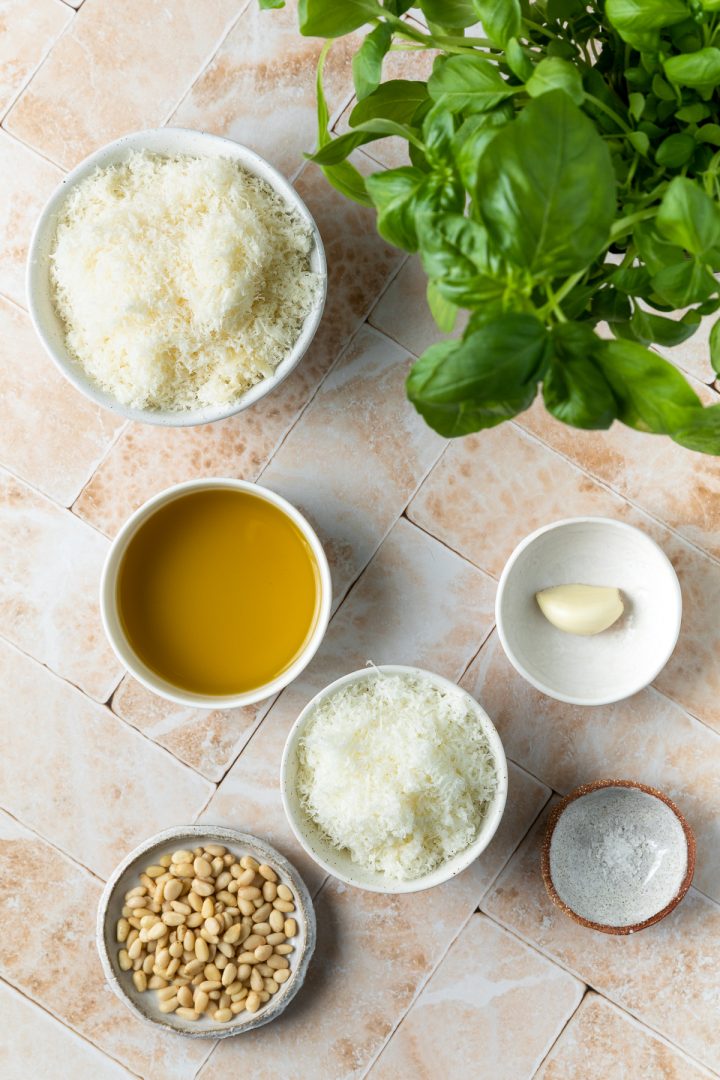
- Basil – Genovese basil, also called sweet basil, is the variety of basil you are most likely to find in the shops.
- Pine nuts – these add a distinctive taste to pesto. However they are expensive, so if you are looking for a cheaper alternative, try cashew pesto.
- Garlic – fresh garlic cloves.
- Cheese – a combination of parmesan cheese (parmigiano reggiano) and pecorino cheese. Traditionally Pecorino Fiore Sardo is used but I am using pecorino romano which is much more readily available.
- Olive oil – use extra virgin olive oil if possible.
- Salt – coarse salt.
How to make pesto Genovese from scratch
Please scroll down to the recipe card at the end of the post for the full recipe.
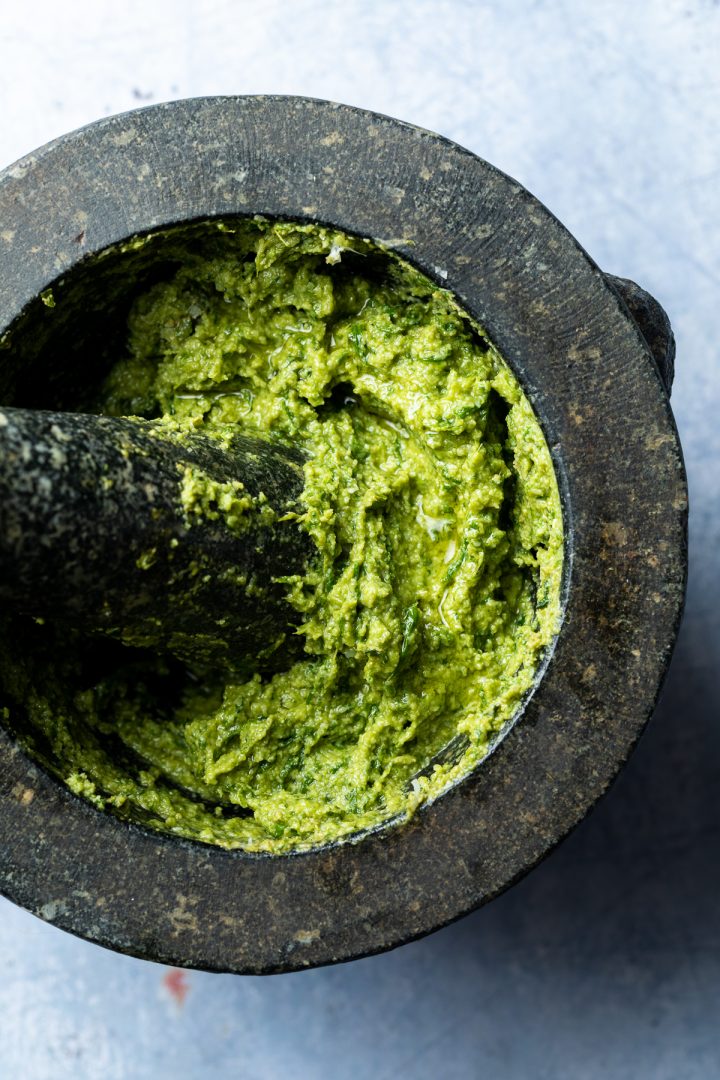
- Pound the garlic clove with a little salt until creamy, then add the pine nuts.
- Once the mixture is smooth and paste-like, add the basil leaves and pound until the basil has broken down. Work slowly at first, from the outside of the mortar to the inside – this will stop the basil leaves from falling out. As the basil starts to become incorporated you can increase the speed at which you pound with the pestle.
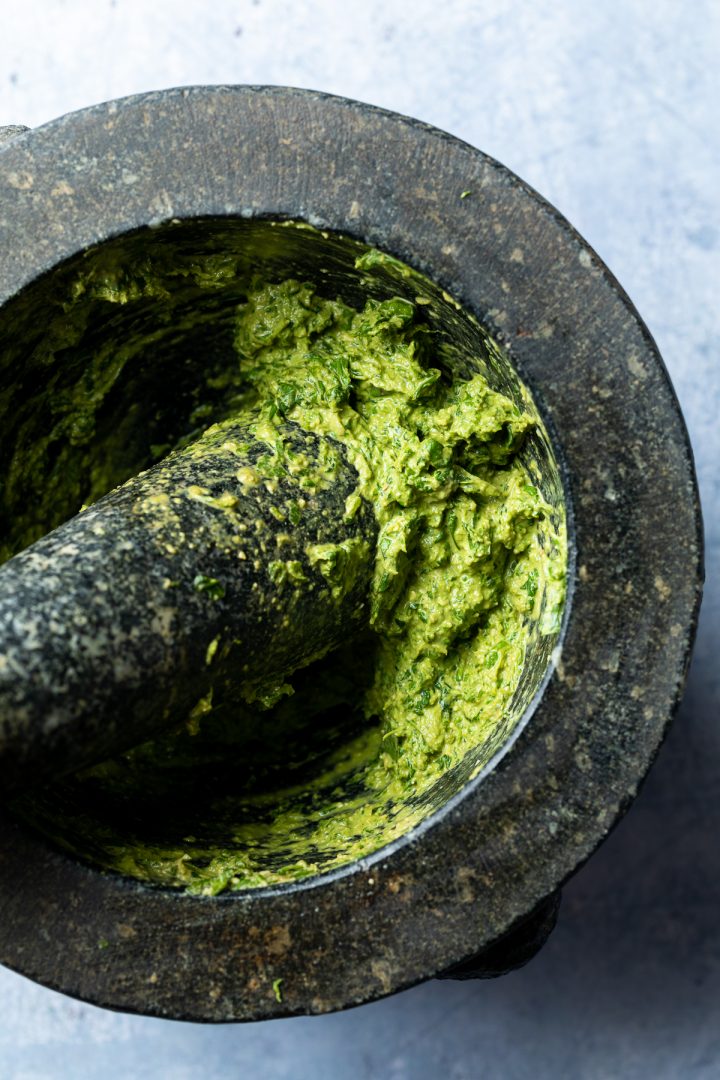
- Add the grated parmesan and pecorino and gently pound into the basil mixture. Once they have been incorporated, add the olive oil and slowly pound until the pesto is smooth.
My recipe tips
- You can use a mini food processor instead of the traditional mortar and pestle, and pulse the ingredients lightly, being careful not to chop them too much at a high speed as this can cause the basil to taste bitter.
- I have made this recipe with both the mini food processor and pestle and mortar, and although the latter is slightly more work, the taste is superior so I would recommend making it in a mortar and pestle, if possible.
- To use pesto with pasta: stir the pesto through warm al dente pasta, adding a little of the pasta cooking water if it is too thick.
- Don’t try making pesto with only pecorino – it is far too salty! I speak from experience 😉
- The pesto is best used soon after making, however if you want to store leftovers, place in a small airtight container with a narrow opening and pour oil over the top of the pesto to completely cover the surface. Store in the fridge for up to 2 days. The top may brown slightly as the air gets to it, however if you gently spoon that off you will be left with bright green pesto underneath.
Ways to use pesto:
- Stirred through pasta, as in this tuna pesto pasta or chicken and pesto pasta salad.
- Stirred through pasta with warm boiled potatoes and green beans (a classic dish called Trenette al Pesto).
- As a sauce for pizza.
- Instead of butter in a sandwich – especially delicious with sliced mozzarella and fresh tomatoes!
- Stirred through soup.
Make ahead/storage
To store: place in a small bowl and drizzle olive oil all over the top of the pesto to ensure no air can get to it (this is what turns the pesto brown).
To freeze: place spoonfuls of the pesto in an ice cube tray, pressing down lightly with a teaspoon. Drizzle olive oil over the top and then place in the freezer.
Why not try…
You may also like these other Italian recipes:


Pesto alla Genovese (Italian Basil Pesto)
Author: Robyn
Equipment
- mortar and pestle or a mini food processor
Ingredients
- 1 clove garlic
- pinch salt
- 60g (1½ c) basil leaves
- 60g (½ c) parmesan finely grated
- 30g (¼ c) pecorino finely grated
- 15 g pine nuts
- 3-4 tablespoons olive oil
Instructions
- Crush the garlic clove with the salt in the mortar and pestle.
- Once creamy, add the pine nuts and pound until you get a smooth paste.
- Add the basil leaves and continue to crush, working from the edges to the middle of the mortar.
- Once the basil is incorporated add the grated parmesan and pecorino and crush until combined.
- When the pesto is smooth (or slightly chunky if you are wanting a chunkier pesto), pour in the oil and slowly pound with the pestle until just combined.
- Test for seasoning and use in your favourite pesto dishes!
Notes
- You can use a mini food processor instead of the traditional mortar and pestle, and pulse the ingredients lightly, being careful not to chop them too much at a high speed as this can cause the basil to taste bitter.
- I have made this recipe with both the mini food processor and pestle and mortar, and although the latter is slightly more work, the taste is superior so I would recommend making it in a mortar and pestle, if possible.
- To use pesto with pasta: stir the pesto through warm al dente pasta, adding a little of the pasta cooking water if it is too thick.
- Don’t try making pesto with only pecorino – it is far too salty! I speak from experience 😉
- The pesto is best used soon after making, however if you want to store leftovers, place in a small airtight container with a narrow opening and pour oil over the top of the pesto to completely cover the surface. Store in the fridge for up to 2 days. The top may brown slightly as the air gets to it, however if you gently spoon that off you will be left with bright green pesto underneath.
Nutrition
HAVE YOU MADE THIS RECIPE?
I’d love to see your creation!
Or just leave a comment below!
Let me know your thoughts!